
Blog
What Is Crazing in Ceramic Glaze? Safety, Causes and What to Do

Quick Answer
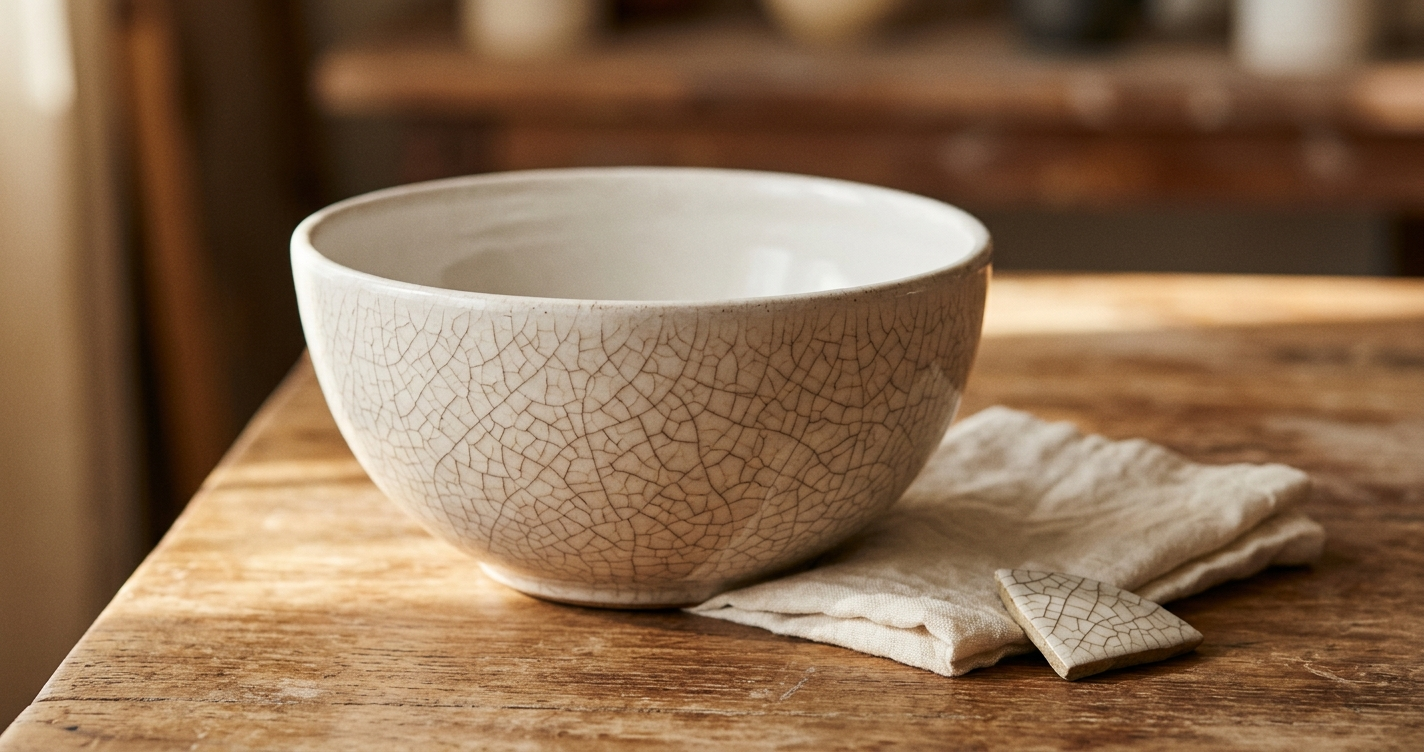
Crazing is a network of fine hairline cracks that appears in the glaze surface of a ceramic piece. It happens when the glaze and clay body expand and contract at different rates during firing or cooling. Crazing is not always dangerous — light exterior crazing on a decorative piece is largely cosmetic. But crazing on the interior food-contact surface of bowls, mugs, or plates is worth taking seriously, as the cracks can trap bacteria and make thorough cleaning difficult. This guide explains everything you need to know.
You notice it on a favourite ceramic bowl one morning — a faint network of fine lines across the glaze, like a spiderweb or a cracked eggshell. The piece is not broken. The glaze has not chipped. But something has clearly changed.
This is crazing in ceramic glaze — one of the most common and most misunderstood phenomena in ceramic care. It causes genuine anxiety in people who use handmade ceramics daily, and the questions it raises are reasonable ones: Is this normal? Is my bowl still safe? Do I need to throw it away?
The answers depend on where the crazing is, how extensive it is, and how the piece is used. This guide covers all of it — what crazing actually is, why it happens, what the research says about safety, and exactly what to do when you find it on a piece you love.
Table of Contents
What Is Crazing in Ceramic Glaze — Explained Simply
Crazing is a network of hairline cracks in the glaze surface of a ceramic piece. It occurs when the thermal expansion of the glaze is not matched to the clay body underneath — if the clay expands or shrinks at a different rate than the glaze during firing or cooling, the glaze stretches under tension and cracks to relieve that pressure.
Think of it this way: the glaze and the clay body are two different materials fused together. When they heat up and cool down, they each change size slightly — expanding when hot, contracting when cool. A perfectly matched glaze and clay body do this at exactly the same rate. When the rates differ — even slightly — the glaze is placed under tension. Over time, or under thermal stress, it releases that tension by cracking. The result is crazing.
Crazing is a thermal expansion mismatch between the glaze and clay body. When the glaze shrinks more than the clay as it cools, it splits to relieve the tension.
This is why crazing is technically classified as a glaze defect — not a user error, not a sign of poor quality clay, but a mismatch between two materials that should have been better matched at the formulation stage.
Why Does Crazing Happen — The Common Causes
Understanding why crazing happens helps you assess whether a crazed piece is likely to get worse and whether the crazing was preventable.
Glaze and clay body mismatch
The most fundamental cause. A typical piece of functional ware is a two-part system in that body and glaze possess independent expansion characteristics. The glaze is fixed to the underlying body and is therefore obliged to conform to the body’s thermally induced size changes. Stresses are thus part of what could be called a glaze-body marriage. When the marriage is poorly matched, crazing is the result.
Glaze applied too thickly
Glazes which should be craze resistant can craze if applied too thickly. This is because the further the glaze surface is away from the body, the lower the compression acting on it. A thicker glaze layer has less support from the clay body beneath and is more susceptible to tension-induced cracking.
Thermal shock during use
Subjecting a ceramic piece to sudden extreme temperature changes — taking it directly from the refrigerator to a hot oven, pouring boiling water into a cold mug, or placing a hot piece on a cold surface — can trigger crazing in pieces that were previously stable. The sudden temperature change causes the glaze and clay body to expand or contract faster than they can accommodate together.
Delayed crazing — the most surprising cause
In a phenomenon called delayed crazing, ceramic glazes can craze years — and sometimes decades or centuries — after the piece was fired. That is because some glazes hold tension better than others. If a ceramic piece with tension beneath the glaze is subjected to high heat or cold, the clay expands or contracts again, allowing the glaze to finally release the pressure it has been holding.
This explains why a piece you have used daily for two years without issue can suddenly develop crazing. The tension was always there — it simply took a specific thermal event to release it. This is normal and does not indicate the piece has deteriorated in any other way.
Moisture expansion in porous clay bodies
Porous bodies swell slightly due to absorption of moisture. Where glazes are in only slight compression this can be sufficient to bring them into tension — resulting in delayed or secondary crazing which occurs over a period of time after the ware has been produced.
This is particularly relevant for lower-fired earthenware, which remains more porous than high-fired stoneware and therefore more susceptible to moisture-driven delayed crazing over time.
Is Crazing in Ceramic Glaze Dangerous? The Honest Answer
This is the question most people really want answered — and it deserves an honest, nuanced response rather than a blanket yes or no.
The bacteria concern — what research actually shows
If the underlying clay matrix is porous and soaks up water then safety could be a concern with crazed ware since the cracks could be wide enough to provide a friendly breeding ground for colonies of bacteria. Containers used to store food are a special concern since a small colony in a crack can become a large culture in the food.
Research published in Ceramics Monthly examined exactly this question. Two glazes were compared — one which crazed and one which did not. Samples were inoculated with bacteria, left to grow for 24 hours, and then subjected to a series of increasingly stringent cleaning methods from simply wiping with a paper towel to washing with soap in a dishwasher at 75°C. The crazed glaze retained some bacteria after all but the most stringent cleaning method, while the uncrazed glaze only retained bacteria after the least stringent cleaning method.
Crazed surfaces do hold onto more bacteria when they are wiped clean, rinsed in water, or washed with soap and water. However when the dish was put into a dishwasher, the crazed and non-crazed dishes were as clean as one another.
What this means in practical terms: a crazed piece that is hand-washed carries more bacterial risk than a non-crazed piece cleaned the same way. A crazed piece cleaned in a dishwasher at high temperature is as clean as a non-crazed piece. The risk is real but manageable — and depends heavily on how the piece is cleaned and what it is used for.
The food storage concern — the highest risk scenario
The highest concern is with food storage containers especially for wet foods and liquids. If you store soup or sauce in a crazed ceramic pot for hours, a small bacterial colony hiding in a crack can multiply in the surrounding food.
This is the most important practical guideline from the research: do not store food in crazed ceramic containers.Serving food in a crazed bowl for a meal is a much lower risk than storing leftovers in one overnight. The duration of food contact is the critical variable.
The glaze leaching concern
Intact glaze traps heavy metals within its matrix preventing food contact. Crazed glaze exposes metal-containing layers to acids and heat, dramatically increasing leaching rates. Vintage dishes manufactured before lead regulations pose extreme risks when crazed.
For modern, responsibly made ceramics with documented lead-free glazes — like quality handmade stoneware — this concern is significantly reduced. The risk is highest with antique pieces, pieces of unknown origin, or brightly coloured pieces made with older glaze formulations.
The structural concern
Aside from the visual defect, crazing can weaken the ware. Fired strength is directly related to crazing since ware strength is enhanced by having the glaze under slight compression whereas it is severely reduced — up to four times less — when the glaze is under tension.
A heavily crazed piece is structurally weaker than a non-crazed one. For serving pieces, this is worth noting — a crazed piece is more likely to crack or break under thermal stress than a piece with an intact glaze surface.
Crazing on the Exterior vs Interior — Why Location Matters
Not all crazing carries the same implications. Where the crazing appears on the piece determines how seriously to take it.
Exterior crazing — largely cosmetic
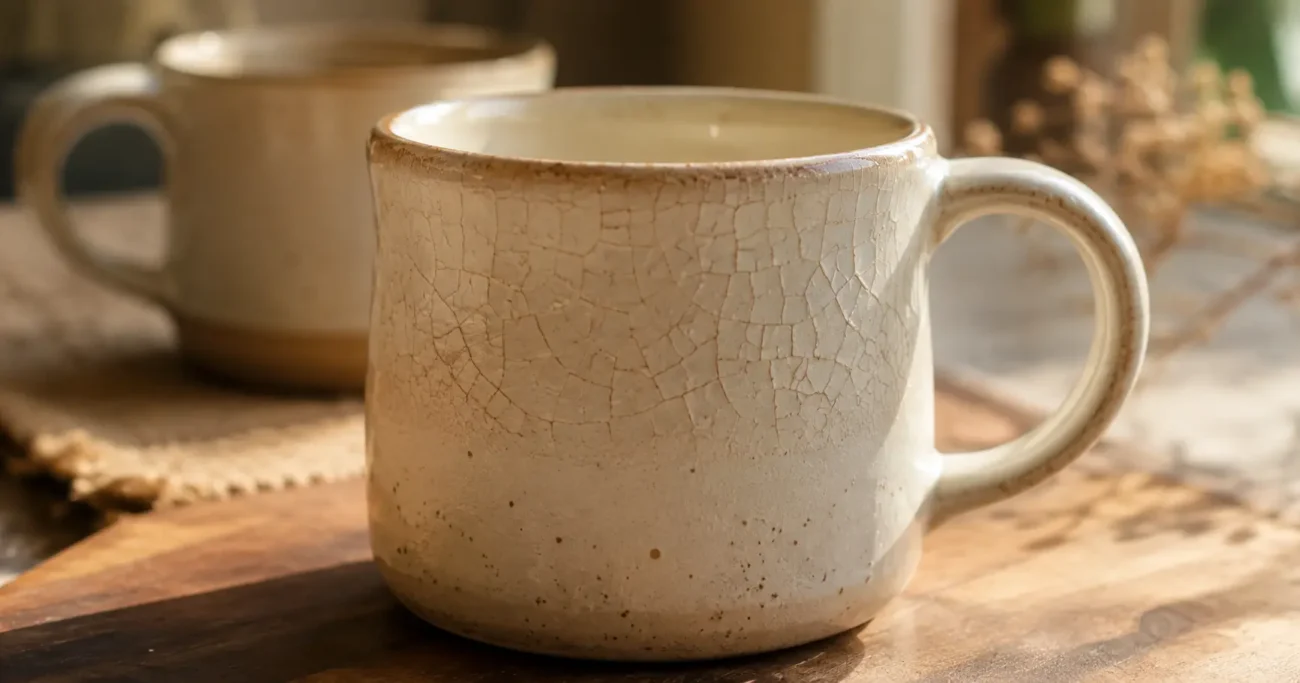
Crazing on the outside of a bowl, mug, or plate — surfaces that do not contact food or liquid directly — is primarily a cosmetic issue. It does not affect food safety and does not indicate the piece needs to be retired. Many people find exterior crazing adds character and warmth to handmade pieces, and this is a reasonable position.
Interior crazing on serving pieces — monitor carefully
Crazing on the interior of a bowl, plate, or mug that is used for serving food or drink warrants more attention. For everyday serving use — not storage — a lightly crazed interior can be used safely if the piece is cleaned thoroughly after each use. The key precautions are: do not use the piece for storing food, clean it thoroughly rather than just rinsing, and retire it from food use if the crazing becomes extensive.
Interior crazing on food storage pieces — retire from storage use
Any piece used for storing food — a ceramic container with a lid, a bowl used to store leftovers in the fridge — should be retired from storage use if the interior shows crazing. The combination of prolonged food contact and potential bacterial growth in the cracks is the highest-risk scenario and not worth the concern.
How to Tell If Your Ceramic Has Crazing
Crazing is not always immediately visible — particularly in its early stages or under certain lighting conditions.
The visual check
Hold the piece under good directional light — natural daylight or a strong lamp held to the side — and look across the glaze surface at a low angle. Crazing typically appears as a fine network of lines that catch the light differently from the surrounding glaze. On dark or heavily textured glazes it can be harder to spot — run your finger across the interior surface and feel for any roughness or irregularity.
The sound check — the most reliable method
Fill the piece with hot water and listen carefully. A piece with crazing will often produce a faint crackling or tinkling sound as the glaze responds to the temperature change — the cracks are expanding slightly as the piece heats up. This sound, sometimes called the piece “singing,” is one of the most reliable indicators of crazing in progress or recently completed.
The ink test
If you suspect very fine crazing that is difficult to see, apply a small amount of food colouring or ink to the glaze surface, leave for a few seconds, then wipe clean. If crazing is present, the colour will remain visible in the cracks even after wiping. This makes even very fine crazing immediately visible.
While crazing affects the glaze surface, many people also ask whether ceramic mugs can contain harmful substances. Learn more in our guide to Are Ceramic Mugs Toxic? where we explain lead, cadmium, and ceramic food safety.
What to Do With a Crazed Ceramic Piece
Finding crazing on a piece you love does not automatically mean throwing it away. Here is a clear decision framework:
Keep and use normally — exterior crazing only
If the crazing is confined entirely to the exterior of the piece and the interior glaze is smooth and intact, the piece is safe for normal food use. Clean as usual. No additional precautions needed.
Keep with modified use — light interior crazing, serving only
If the interior shows light crazing and the piece is used only for serving — not storage — you can continue using it with these precautions:
- Clean thoroughly after each use rather than just rinsing
- Do not store food or liquid in the piece for extended periods
- Avoid using the piece for strongly acidic foods — tamarind, lemon-based dishes, vinegar — for prolonged contact
- Monitor the crazing — if it becomes significantly worse, retire the piece from food use
Retire from food use — extensive interior crazing or food storage use
If the interior crazing is extensive, if the piece shows signs of the glaze beginning to lift or flake, or if the piece has been used for food storage, retire it from food use. It can still be used as a decorative piece, a planter, or a storage container for non-food items.
Retire immediately — vintage pieces with unknown glaze history
Antique or vintage ceramic pieces with interior crazing should be retired from food use immediately — particularly if the piece predates modern lead-free glaze standards. Vintage dishes manufactured before lead regulations pose extreme risks when crazed. The crazing exposes whatever is in the glaze to food contact in a way that an intact glaze surface prevents.
Understanding crazing in ceramic glaze gives you the confidence to make the right decision about every piece you own.
Can Crazing Be Prevented?
From a maker’s perspective, crazing is preventable through careful glaze formulation and testing. From a user’s perspective, certain habits reduce the likelihood of triggering crazing in pieces that are borderline.
What users can do to reduce crazing risk:
- Avoid thermal shock — do not transfer ceramic pieces directly from cold to very hot or vice versa. Allow refrigerated pieces to come to room temperature before adding hot liquid. Do not pour boiling water directly into a cold mug.
- Avoid the dishwasher for borderline pieces — repeated dishwasher cycles subject ceramic pieces to significant thermal and chemical stress. Hand washing is gentler on the glaze-body relationship.
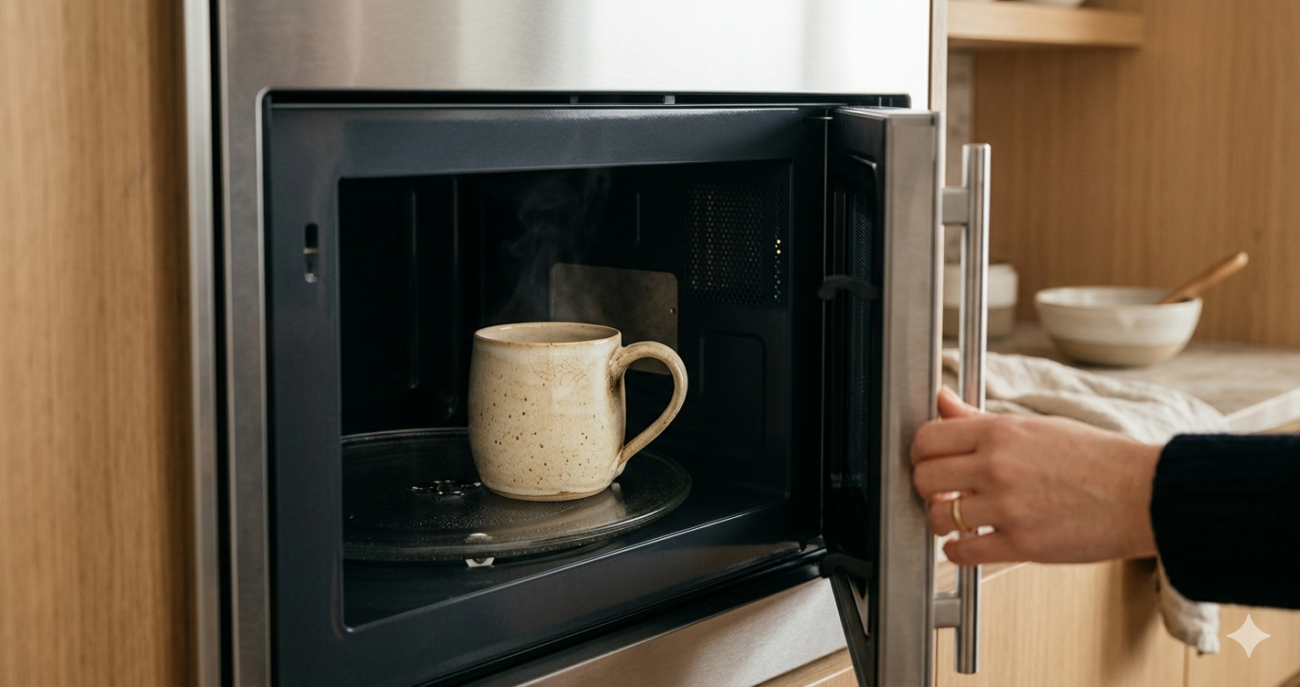
- Do not microwave cold pieces — placing a cold ceramic piece in a microwave and running it on high power is one of the most common triggers for thermal-shock-induced crazing. Allow pieces to reach room temperature first.
- Store pieces carefully — stacking ceramic pieces without protection between them can cause micro-impacts that, over time, contribute to glaze stress.
Crazing vs Crackle Glaze — An Important Distinction
Not all fine lines in a ceramic glaze are accidental. It is worth knowing the difference between unintentional crazing and intentional crackle glaze.
Crackle glaze is a deliberate aesthetic technique where the potter intentionally creates a mismatched glaze and clay body to produce a controlled network of fine cracks. The result looks similar to crazing but is planned, consistent across the piece, and often enhanced with ink or pigment to make the pattern more visible.
The practical difference for food safety is the same — intentional crackle glaze carries the same bacteria-harbouring concern as unintentional crazing. A beautiful crackle-glazed bowl used for serving is fine. A crackle-glazed bowl used for food storage is not recommended for the same reasons as a crazed piece.
What Should You Do If Your Mug Has Crazing?
Understanding what crazing is is only half the story. The next question most ceramic owners ask is whether a crazed mug remains safe for everyday use. Explore our detailed guide on Is It Safe to Use a Mug With Crazing? to learn when crazing is harmless and when it may be time to replace a mug.
What causes crazing in ceramic glaze?
Crazing is caused by a mismatch between the thermal expansion rates of the glaze and the clay body. When the glaze shrinks at a different rate than the clay during cooling, it goes under tension and cracks to relieve that stress. It can also be caused by glaze applied too thickly, thermal shock during use, or moisture expansion in porous clay bodies.
Is crazing in ceramics dangerous?
It depends on where the crazing is and how the piece is used. Exterior crazing is largely cosmetic and not a safety concern. Interior crazing on serving pieces carries a low risk if the piece is cleaned thoroughly and not used for food storage. The highest risk is storing food in crazed containers for extended periods — the cracks can harbour bacteria that multiply in the surrounding food. Vintage pieces with unknown glaze history and interior crazing should be retired from food use.
Can I still use a crazed ceramic bowl or mug?
Yes — with some precautions. For serving use, a lightly crazed piece can continue to be used if cleaned thoroughly after each use and not used for food storage. Avoid storing acidic foods in it for extended periods. If the crazing is on the exterior only, no additional precautions are needed. If the crazing is extensive across the interior surface or the piece is vintage with unknown glaze history, retire it from food use.
Does crazing mean a ceramic piece is poor quality?
Not necessarily. Crazing is a glaze-body fit issue — it can occur in pieces made from quality materials if the glaze formulation was not perfectly matched to the clay body. It can also occur in previously stable pieces due to thermal shock or delayed crazing years after firing. However, a well-formulated glaze fired at the correct temperature on a compatible clay body should not craze under normal use conditions. Consistent crazing across all pieces from a maker suggests a glaze formulation issue worth noting.
Can crazing get worse over time?
Yes — particularly if the piece continues to be subjected to thermal stress. A piece with light crazing that is repeatedly taken from cold to hot conditions may develop more extensive crazing over time as the tension in the glaze continues to release. The ink test done periodically can help you monitor whether crazing is spreading.
Is crazing the same as cracking?
No. Crazing is a network of fine hairline cracks confined to the glaze surface — the clay body underneath remains intact and the piece is structurally whole. A crack goes through the clay body itself and compromises the structural integrity of the piece. A crazed piece holds liquid normally. A cracked piece may leak. These are fundamentally different conditions requiring different responses.
How do I clean a crazed ceramic piece safely?
Wash it thoroughly with warm soapy water after each use rather than just rinsing. For thorough cleaning, a dishwasher at high temperature is more effective at eliminating bacteria in the cracks than hand washing. Do not use abrasive scrubbers that could widen the cracks further. Dry the piece completely before storing — leaving a crazed piece damp encourages moisture absorption into the exposed clay. Crazing in ceramic glaze is always confined to the surface — a crack goes through the clay body itself.
Related Reads
Are Handmade Ceramics Food Safe? What Every Buyer Should Know A complete guide to ceramic food safety — from lead in glazes and firing temperatures to how to assess whether a handmade piece is truly safe for everyday food and drink.
Is Ceramic Microwave Safe? What Most People Get Wrong Not all ceramics behave the same way in a microwave. Learn which types are safe, how to test your pieces at home, and what to avoid.
Is Your Ceramic Mug Safe? The Ultimate Guide to Quality and Craftsmanship How to assess whether your ceramic mug is safe for daily chai and coffee — from glaze quality and rim condition to signs that a piece needs retiring.











5 thoughts on “What Is Crazing in Ceramic Glaze? Safety, Causes and What to Do”