
Blog
Are Handmade Ceramics Food Safe? What Every Buyer Should Know

Quick Answer
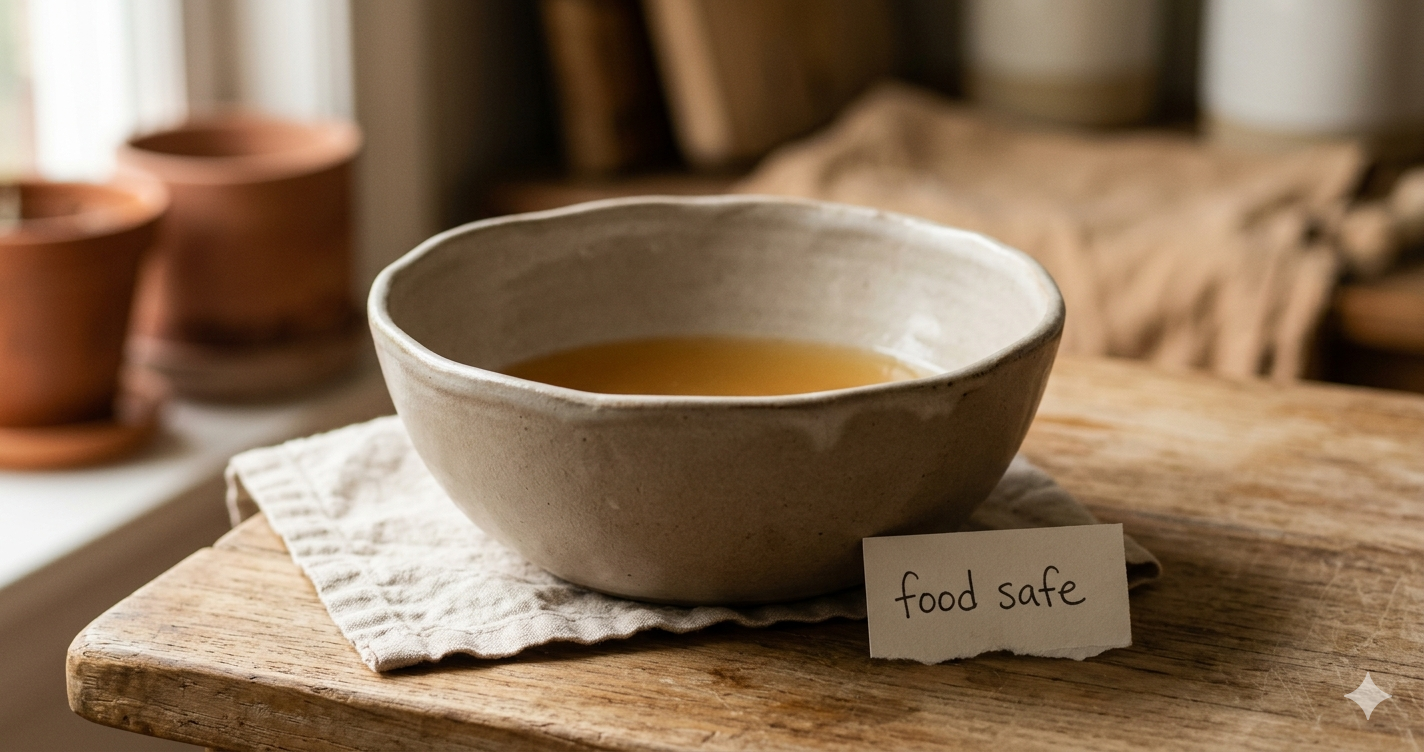
Yes — well-made handmade ceramics are food safe. The safety depends on three things: the type of clay used, how the glaze was formulated, and the temperature at which the piece was fired. High-fired stoneware with a properly formulated, lead-free glaze is completely safe for everyday food and drink. The key is knowing what to look for — and who made it.
If you have recently bought a handmade ceramic bowl, mug, or serving piece and found yourself wondering whether it is actually safe to eat and drink from — you are not alone. It is one of the most common questions people ask about handmade ceramics, and it deserves a clear, honest answer.
The short answer is yes. But the longer answer — the one that actually helps you make informed choices — requires understanding a little about how ceramics are made, what glazes do, and what genuinely separates a safe piece from an unsafe one.
This article covers all of it.
Table of Contents
What Does “Food Safe” Actually Mean in Ceramics?
Food safety in ceramics comes down to one core question: will anything harmful leach out of the clay or glaze and into your food or drink?
The term “food safe” has two components. First, the glaze must be chemically stable — meaning it does not dissolve into food, especially acidic foods like chai, coffee, tamarind, or citrus. Second, the piece must be made from a clay body that is sufficiently vitrified — meaning the clay has been fired to a temperature where it becomes dense, non-porous, and resistant to absorbing liquids.
The role of the glaze
The glaze is the glass-like coating fired onto the surface of ceramic pieces. A well-formulated glaze creates a smooth, impermeable surface that keeps food from touching the raw clay underneath. When a glaze is properly designed and fired at the correct temperature, it becomes chemically inert — meaning it does not react with food or release any substances into it.
Problems arise when glazes are poorly formulated, contain heavy metals like lead or cadmium used to intensify colour, or are fired at temperatures too low to fully fuse the glaze to the clay body.
The role of firing temperature
Firing temperature is arguably the single most important factor in food safety. High-fire stoneware — typically fired between 1200°C and 1300°C — produces a dense, vitrified clay body with very low porosity. At these temperatures, the glaze fully fuses with the clay, creating a durable, food-safe surface.
Low-fire earthenware, fired at lower temperatures, remains more porous and is generally more vulnerable to glaze instability. This does not mean all low-fire ceramics are unsafe — but it does mean the margin for error in glaze formulation is smaller.
Do Handmade Ceramics Contain Lead?
This is the question most people are really asking — and it deserves a direct answer.
Modern, responsibly made handmade ceramics do not use lead in their glazes. The use of lead as a glaze flux — which was once common because it lowered the melting point of glazes and produced a beautiful glossy finish — has been widely phased out by responsible ceramic makers over the past few decades.
However, the concern is not without basis. The US FDA notes that traditional or handmade ceramics from several countries — including India — can contain elevated lead levels if the pottery is not made properly or if old kilns previously used for lead-bearing glazes are still in use. The risk is highest with:
- Brightly coloured glazes in red, orange, and yellow — where lead was historically used to intensify pigment
- Antique or heirloom pieces made before modern glaze standards
- Pieces from makers who have not transitioned to documented lead-free glaze formulations
- Poorly fired pieces where the glaze has not fully fused
What about Indian handmade ceramics specifically?
India has national standards for ceramic safety. The Bureau of Indian Standards publishes IS 10125 and IS 1478, which set limits for lead and cadmium release from ceramic ware. The honest reality, however, is that enforcement in smaller studio settings remains inconsistent, and many potters rely on tradition and experience rather than formal testing documentation.
This does not mean Indian handmade ceramics are unsafe — far from it. It means that as a buyer, knowing your maker matters more than the country of origin. A studio that uses documented lead-free glazes, fires at high temperatures, and can speak to their process is producing pieces that are as safe as any certified industrial ceramics.
How to Tell if a Ceramic Piece Is Food Safe
You do not need a lab test to make a reasonable assessment. Here is what to look and ask for.
Signs of a safe piece
- High-fired stoneware or porcelain — the maker can tell you the clay body and firing temperature. Stoneware fired above 1200°C is vitrified and dense
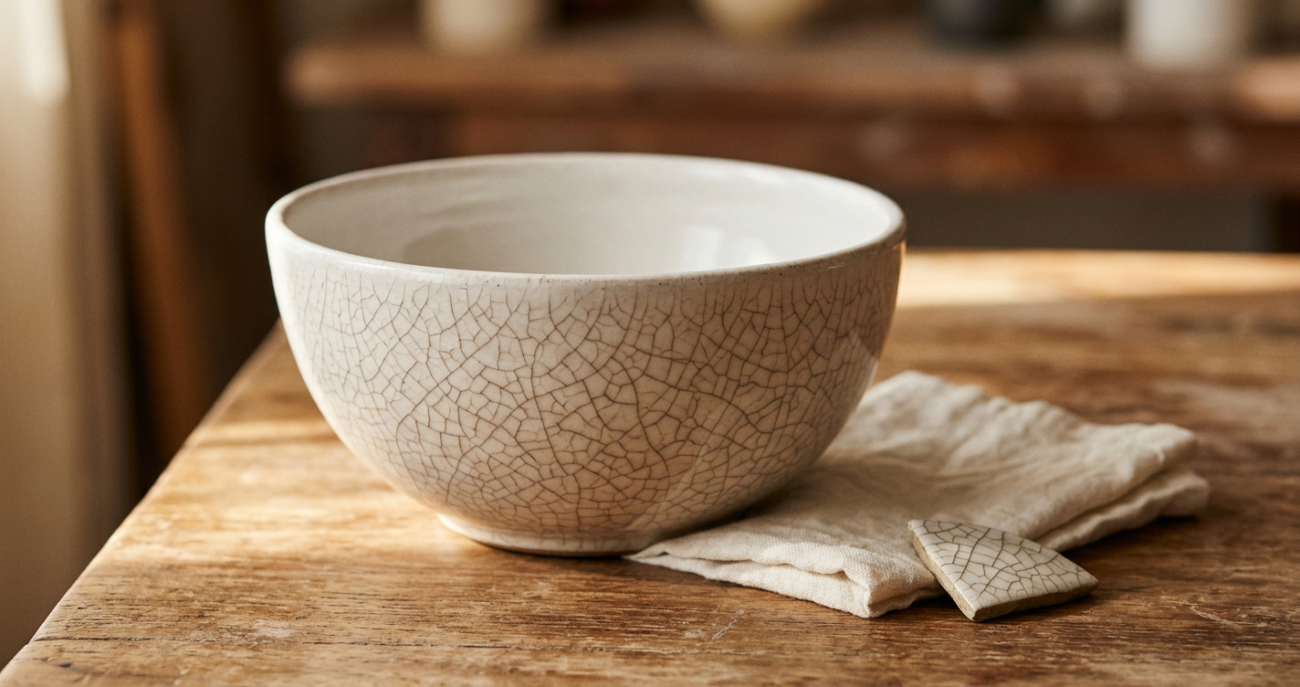
- Matte or satin glaze with no visible crazing — a smooth, uncracked glaze surface is essential. Crazing — the fine network of cracks sometimes seen in glaze — can harbour bacteria and indicates glaze-clay mismatch
- Earthy, neutral glaze colours — whites, warm greys, terracottas, and natural tones are typically safer than intensely bright reds or oranges, which historically required heavy metal pigments
- A maker who can describe their process — a responsible ceramic studio should be able to tell you what clay body they use, their firing temperature, and whether their glazes are lead-free
- No metallic decoration on the food-contact surface — gold, silver, or metallic lusters on the interior of a mug or bowl are not microwave safe and can indicate the use of materials that require more careful handling
Signs to approach with caution
- Crude, irregular pieces with no information about their origin or maker
- Intensely bright colours — especially red, orange, or yellow — with no documentation of food-safe glazes
- Visible crazing across the interior glaze surface
- A grayish residue or change in glaze surface after washing — this can indicate a chemically unstable glaze
- Antique or heirloom pieces of unknown origin — these may predate modern lead-free glaze standards
The simple lemon test you can do at home
If you want a basic at-home check, try this: squeeze lemon juice onto a horizontal interior glazed surface of the piece and leave it overnight. Rinse it the next morning. If the glaze surface has changed colour, become dull, or feels different in texture, the glaze is reacting to acid — which means it could leach materials into acidic foods and drinks over time. A stable, food-safe glaze will show no change at all. Once you know your ceramics are food safe, the next step is using them beautifully — our dining table styling guide covers exactly that.
Does Crazing Make a Ceramic Piece Unsafe?
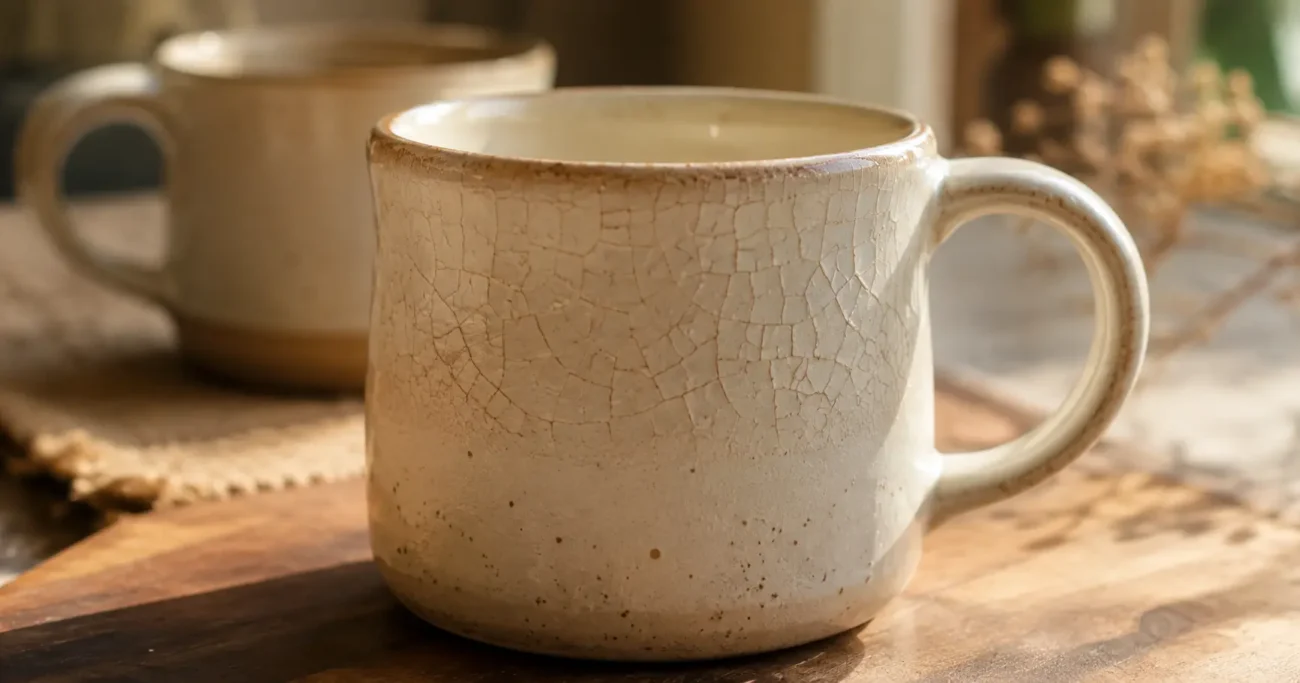
Crazing — the fine network of hairline cracks that sometimes appears across a ceramic glaze — is one of the most commonly misunderstood aspects of ceramic safety.
Crazing occurs when the glaze and clay body have different rates of thermal expansion, causing the glaze surface to crack under tension. It is primarily a glaze-fit issue, not a clay quality issue.
From a food safety standpoint, crazing is worth taking seriously. The cracks can trap moisture, food residue, and bacteria in ways that make thorough cleaning difficult. For everyday food and drink use, a non-crazed glaze surface is always preferable.
A crazed piece does not automatically need to be thrown away — many people have used crazed ceramics for decades without issue. But it is wise to avoid storing acidic foods or drinks in crazed pieces for extended periods, and to retire a crazed piece from food use if the crazing becomes extensive.
What ArtyCera Does to Ensure Food Safety
At ArtyCera, food safety is not an afterthought — it is built into how every piece is made.
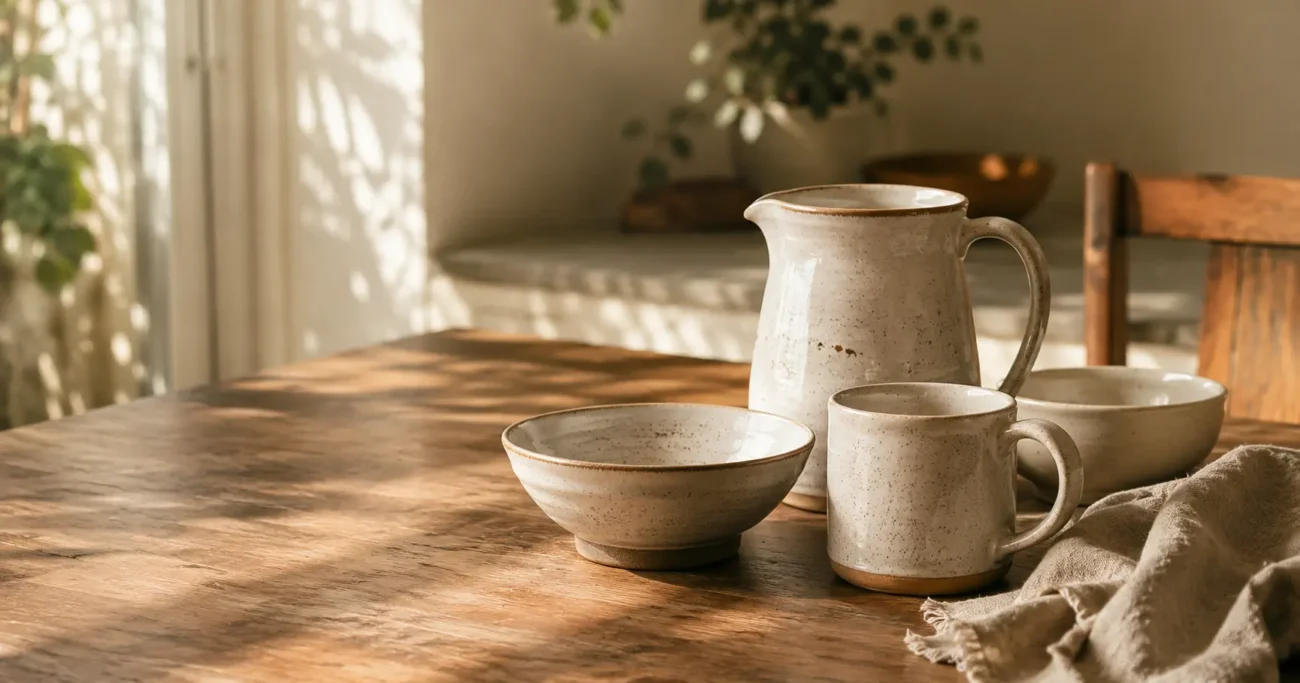
Every piece in our collection is made from stoneware clay, fired at 1200°C — a temperature at which the clay body becomes fully vitrified and dense, with minimal water absorption. This firing range ensures that the clay itself is stable and non-porous.
All glazes used on ArtyCera pieces are lead-free and within prescribed standards. We do not use metallic lusters, raw metal oxides above safe thresholds, or brightly pigmented glazes on any food-contact surfaces.
If you have any questions about the materials used in a specific piece, you are welcome to reach out to us directly. We believe you should know exactly what you are eating and drinking from — and we are happy to answer.
Caring for Your Ceramics to Keep Them Food Safe
Even a well-made, food-safe ceramic piece needs reasonable care to stay that way.
- Hand wash where possible — repeated dishwasher cycles can gradually wear down glaze surfaces, especially matte glazes. Hand washing in warm water with mild soap is always the gentler option
- Avoid prolonged storage of acidic foods — storing tamarind, lemon-based dishes, tomato gravies, or vinegar-heavy foods in ceramic containers for extended periods increases the chance of glaze interaction. Serve in ceramics, but store in glass or steel
- Do not use cracked or heavily crazed pieces for hot liquids — if the glaze has cracked significantly, retire the piece from daily food use
- Avoid abrasive scrubbing — steel wool or harsh scrubbers can scratch and thin the glaze surface over time
If you want to learn more about keeping your ceramics safe, read our Complete Ceramic Care Guide: Microwave Safety, Cracks, Cleaning & Everyday Use.
Frequently Asked Questions
Are handmade ceramics safe for chai and coffee?
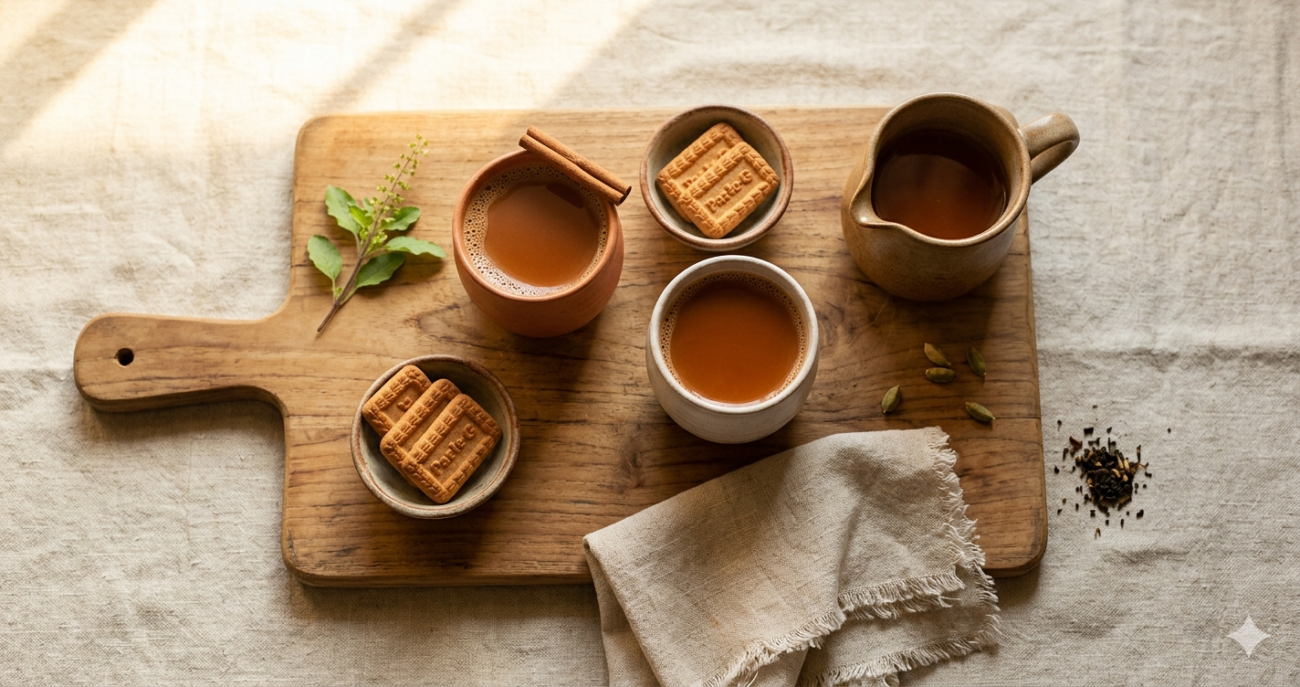
Yes — provided the piece is high-fired stoneware with a lead-free, food-safe glaze. The interior glaze must be stable enough to resist the mild acidity of tea and coffee over daily use. A glaze that passes the lemon test and shows no crazing is safe for regular use with hot beverages.
Do ceramic mugs contain lead?
Modern, responsibly made ceramic mugs do not contain lead in their glazes. Lead was historically used as a flux in ceramic glazes but has been phased out by reputable makers. The risk is highest with antique pieces, brightly coloured pieces of unknown origin, or pieces from makers who cannot confirm their glaze materials. Always buy from a maker who can speak to their process.
What is the difference between food safe and lead free?
These are related but distinct terms. “Lead free” means no lead was used in the glaze formulation. “Food safe” means the fired glaze, when tested, does not leach harmful levels of lead, cadmium, or other heavy metals into food — even if trace amounts of naturally occurring metals are present. A piece can be food safe without being entirely lead free if the lead is fully bound into the glaze structure during firing and does not leach. Reputable makers aim for both.
Is it safe to use handmade ceramics for acidic Indian food?
For serving — yes. Dal, sambar, tamarind-based dishes, and chutneys can be safely served in high-fired, food-safe ceramics. Where caution applies is in prolonged storage. Avoid keeping strongly acidic foods in ceramic containers overnight or for extended periods, as sustained acid contact can interact with glaze surfaces over time. Serve in ceramics, store in glass or steel.
How do I know if my ceramic piece is food safe?
Ask your maker three questions: What clay body is used and at what temperature is it fired? Are the glazes lead-free and documented as food safe? Is there any crazing on the interior glaze surface? A maker who can answer these clearly is producing with food safety in mind. If the piece is from an unknown source, the lemon test described above gives a basic at-home indication of glaze stability.
Can I put handmade ceramics in the microwave?
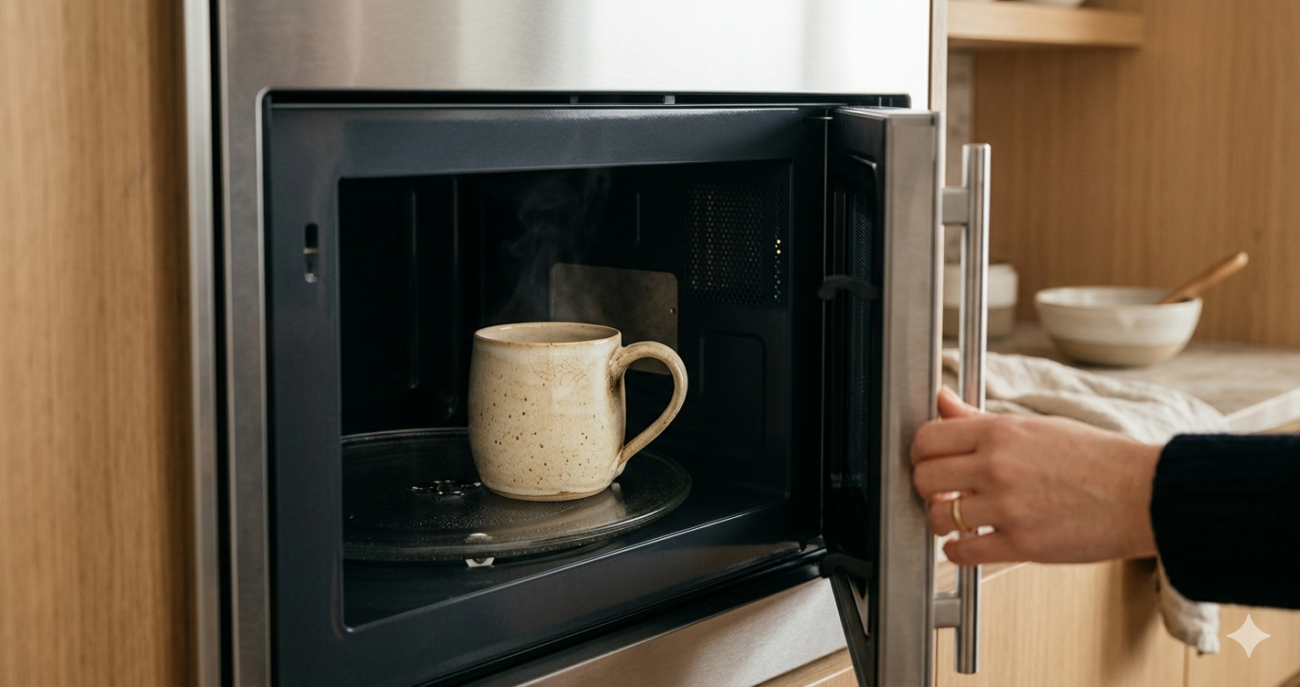
High-fired stoneware with no metallic decoration is generally microwave safe. Fill the piece with water and microwave for one minute — if the piece gets significantly hotter than the water, it is absorbing microwave energy and should not be used in the microwave. Any piece with metallic decoration, gold trim, or luster glazes should never go in the microwave.
Related Reads
Still unsure about the microwave? The answer depends on more than just the material — our guide on ceramic microwave safety breaks it down completely.
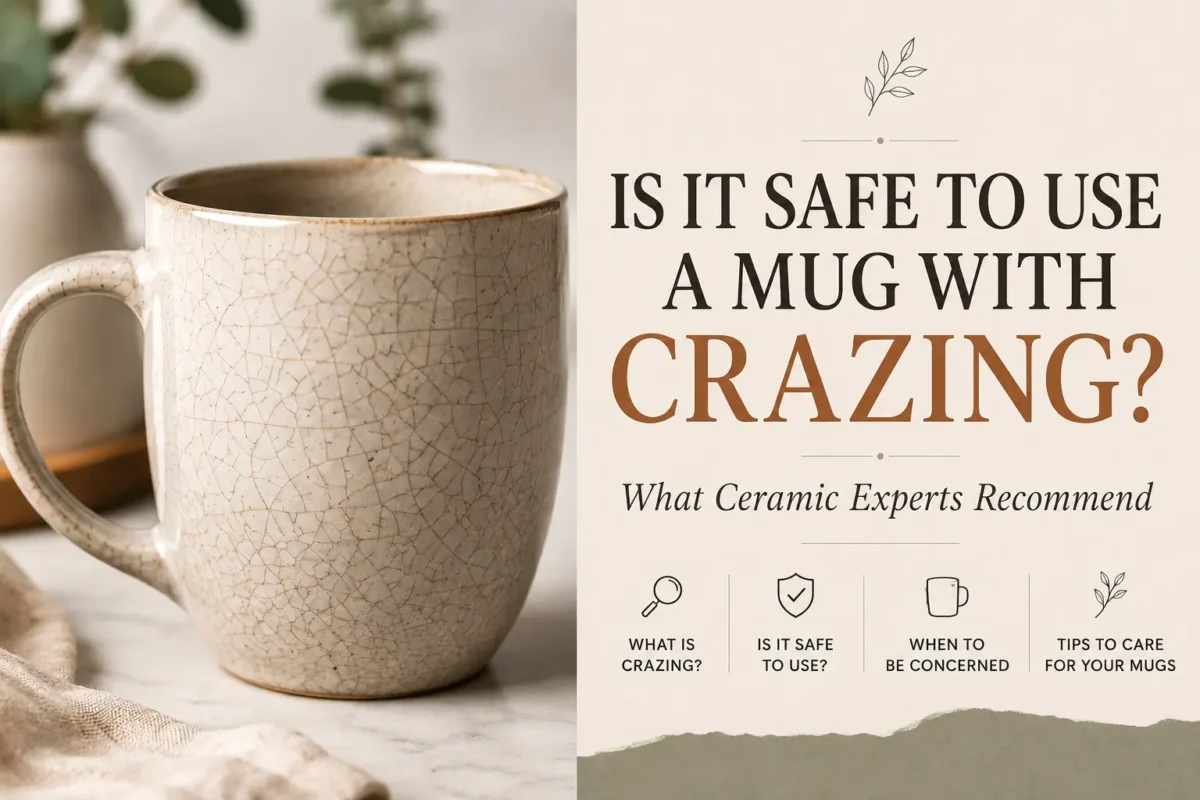
What Is Crazing in Ceramic Glaze? Safety, Causes and What to Do A complete guide to understanding crazing — what causes the fine hairline cracks in ceramic glaze, whether they are dangerous, and exactly what to do when you find them on a piece you use daily.

6 thoughts on “Are Handmade Ceramics Food Safe? What Every Buyer Should Know”