
Blog
Is Your Ceramic Mug Safe? The Ultimate Guide to Quality and Craftsmanship

Quick Answer
Yes — most well-made ceramic mugs are safe for everyday tea and coffee. The key factors are a food-safe lead-free glaze, proper high-fire firing temperature, and no metallic decoration. Watch for crazing, persistent metallic taste, or rough rims as signs a mug may need retiring. Handmade stoneware mugs from reputable makers are generally as safe as — and often safer than — mass-produced alternatives.
When you reach for your favorite ceramic mug each morning, the last thing you should worry about is whether your drink is reacting with the vessel itself. Understanding the intersection of art and science is key to ensuring your collection is as safe as it is beautiful.
Table of Contents
Understanding Ceramic Safety: Glazes and Toxins
How to Ensure Your Mug Is Lead-Free
In the world of artisan ceramics, “lead-free” isn’t just a buzzword—it’s a manufacturing standard. Most modern potters use glazes specifically formulated without lead or cadmium. To verify this, look for “Certified Lead-Free” labels or ask the artist directly about their firing process. High-fire stoneware and porcelain are generally safer bets, as the intense heat helps create a stable, non-reactive glass surface.
Ceramic Mug Glazes: Which Ones Are Food Safe?
Not every beautiful finish is meant to touch your lips. Glaze safety is determined by its chemical stability:
- Food-Safe Glazes: These are formulated to resist “leaching,” meaning they won’t release chemicals into acidic drinks like coffee or lemon tea.
- Decorative Glazes: Often found on the exterior, these may feature heavy textures or metallic finishes that can trap bacteria or leach minerals.
Signs of an Unsafe Mug: When to Stop Using It
Even a high-quality mug can become unsafe over time due to wear and tear. Keep an eye out for these red flags:
- Crazing: Tiny spider-web cracks in the glaze can harbor bacteria.
- Leaching: If you notice a persistent metallic taste, the glaze might be breaking down.
- Rough Rims: For those with sensitive mouths, a rough or unglazed rim can cause irritation.
Are Ceramic Mugs Safe for Hot Drinks?
Yes, high-quality ceramic mugs are among the safest materials for serving hot beverages such as tea, coffee, hot chocolate, and herbal infusions.
Unlike some plastic cups, properly fired ceramic does not release chemicals when exposed to hot liquids. The ceramic body remains stable at temperatures far higher than those encountered during normal everyday use.
However, quality matters. A well-made ceramic mug should have:
- A food-safe glaze
- Even firing during production
- No deep cracks or chips
- A smooth, non-porous surface
Poorly manufactured ceramics or mugs with damaged glaze can become less hygienic over time. For everyday use, choosing a well-crafted ceramic mug from a reputable maker is generally one of the safest options available.
Is It Safe to Use a Mug With Crazing?
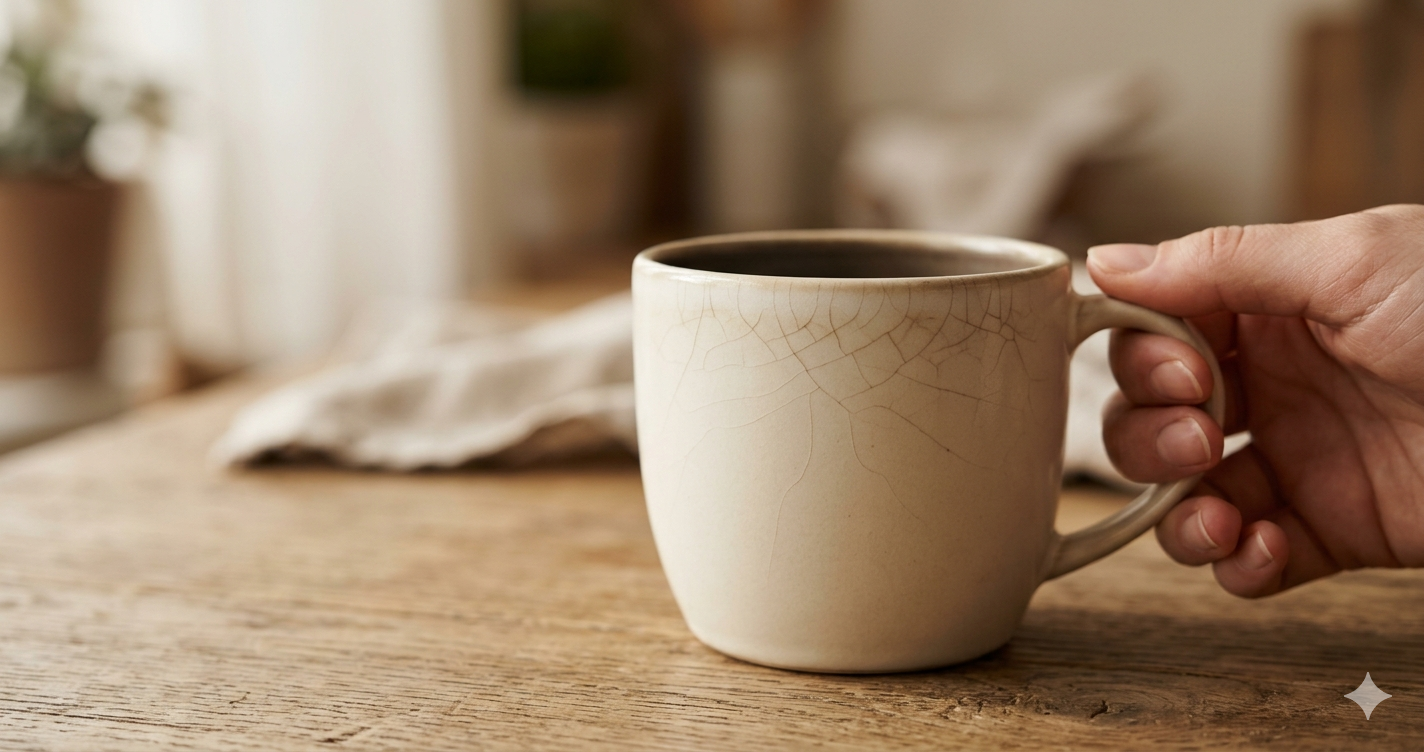
Crazing refers to the fine spiderweb-like lines that sometimes appear in a ceramic glaze. These lines are caused by differences in the expansion rates of the clay body and the glaze.
The answer depends on the severity of the crazing.
Light surface crazing on a decorative piece is often considered harmless. However, on mugs used daily for drinking, extensive crazing can create tiny spaces where moisture, coffee, tea, or food residue may become trapped.
Over time this can lead to:
- Staining
- Persistent odours
- Difficulty cleaning
- Potential bacterial growth
If a mug has heavy crazing, visible staining inside the cracks, or signs of deterioration, it may be wise to retire it from food use.
A high-quality ceramic mug should have a durable glaze that resists significant crazing under normal use.
How Can You Tell if a Mug Is Microwave Safe?
Many people assume all ceramic mugs are microwave safe, but this is not always true.
A ceramic mug is generally microwave safe when:
- It does not contain metallic decoration
- It has been fired correctly
- The manufacturer specifically labels it microwave safe
Mugs with gold, silver, platinum, or metallic accents should never be placed in a microwave.
A simple home test is to place the empty mug alongside a cup of water in the microwave for one minute. If the mug becomes significantly hotter than the water, it may not be microwave safe.
When in doubt, always follow the manufacturer’s guidance.
Are Handmade Ceramic Mugs Safe?
Handmade ceramic mugs can be just as safe as factory-produced mugs when they are made using food-safe materials and proper firing techniques.
The term “handmade” does not automatically mean safer or less safe. What matters is:
- The quality of the clay
- The glaze formulation
- The firing process
- The craftsmanship
A properly made handmade ceramic mug should have:
- A smooth drinking rim
- Food-safe glaze
- Consistent finish
- No structural cracks
- Good resistance to staining
Many ceramic enthusiasts prefer handmade mugs because of the attention given to craftsmanship and quality during production.
When Should You Stop Using a Ceramic Mug?
Ceramic mugs can last for many years, but there are situations where replacement is recommended.
Consider retiring a mug if:
- The drinking rim is chipped
- Deep cracks are visible
- Heavy crazing contains staining
- The glaze is flaking
- The mug leaks moisture
- The handle feels unstable
A damaged mug may still have sentimental value, but it is often better repurposed as a planter, pen holder, or decorative piece rather than used for drinking.
Defining Quality: What Makes a “Good” Ceramic Mug?
The Difference Between Porcelain and Stoneware
Choosing the right material depends on your preference for weight and aesthetics. Porcelain is typically finer and more delicate, while stoneware is known for its rugged durability and earthy feel.
How Mug Shape and Weight Affect Your Drinking Experience
The best ceramic mug shape is ergonomic; it should feel balanced in your hand and comfortable against your lips. Weight also plays a role—some drinkers prefer a heavy, grounded feel, while others look for lightweight options for daily use.
Handmade vs. Mass-Produced: Why Craftsmanship Matters
Handmade mugs offer unique benefits, such as artistic designs that mass-produced items cannot replicate. Every artisan mug is a piece of functional art, often featuring better heat retention and more thoughtful handle designs.
Looking to buy a new jug? Our detailed guide on how to choose the perfect ceramic water jug explains what to look for, from size and pouring comfort to handcrafted quality.
Investing in Artisanship: Price vs. Value
How Much Should a Quality Ceramic Mug Cost?
Understanding fair pricing for quality handmade mugs involves looking at the labor, materials, and safety testing involved. While they cost more than factory-made versions, you are paying for a professional potter’s expertise and a unique, safer product.
Are Expensive Handmade Mugs Actually Worth the Price?
For many, the investment is justified by the longevity and the support of local artists. High-quality ceramic mugs are built to last for years, making the cost-per-use much lower than it appears at first glance.
Practical Care for Long-Lasting Mugs
Dishwasher and Microwave Safety: What You Need to Know
While many ceramic mugs can go in the dishwasher or microwave, always check the artist’s recommendations. Handmade items with gold luster or specific delicate glazes may require hand-washing to prevent damage.
Pro-Tips for Maintaining Handmade Ceramics
To extend the life of your mugs, avoid “thermal shock” (moving a mug from a freezing fridge to boiling water) and use gentle cleaning methods to keep the glaze looking vibrant for years. Learn more about how to keep your ceramics safe from our Complete Ceramic Care Guide.
What Makes a Ceramic Mug Safe for Daily Chai and Coffee
For Indian homes specifically, the daily chai mug gets more use than almost any other piece in the kitchen. Hot liquid, mild acidity from tea, repeated microwave reheating — the mug goes through more thermal and chemical stress than most people realise.
A ceramic mug that is safe for daily chai and coffee needs three things working together:
A vitrified clay body — the clay must be fired at high enough temperatures to become dense and non-porous. A porous clay body absorbs liquid over time, weakening the structure and making the mug less stable with repeated heating.
A chemically stable glaze — the glaze must not react with the mild acidity of tea or coffee even with daily use over months and years. A glaze that is stable when new but begins leaching after six months of daily hot liquid contact is not truly food safe for long-term use.
No metallic decoration on the interior — gold rims, metallic luster glazes, and copper oxide surface decoration should never be on the interior of a mug used for daily hot drinks. These elements can react with acidic liquids and are not suitable for microwave use.
A handleless ceramic chai cup — the style common in Indian studio ceramics — actually has an advantage here. Without a handle join, there is no weak structural point where cracks can develop over time.
How to Tell if Your Ceramic Mug Is Still Safe to Use
Even a well-made mug has a lifespan. Here is how to assess a mug you have been using for some time:
Check the interior glaze carefully under good light — run your finger across the interior surface. It should feel smooth and even with no rough patches, pitting, or areas where the glaze has worn away. Any area of exposed clay is a point of weakness.
Look for crazing under magnification — the fine network of hairline cracks that sometimes develops in glaze over time. Light crazing on the exterior is largely cosmetic. Crazing on the interior — especially if you use the mug for acidic drinks like chai with lemon or black coffee — is worth taking more seriously.
Do a smell test on a clean mug — if a thoroughly washed and dried mug has a persistent earthy or chemical smell, the clay body may be absorbing liquid through glaze cracks. This is a sign to retire the mug from daily hot drink use.
Check the base and rim for chips — chips on the rim are uncomfortable and can harbour bacteria in the exposed clay. A chipped mug is not necessarily unsafe, but a chip on the interior drinking rim is worth noting.
Many people also wonder whether ceramic mugs can contain harmful substances such as lead or cadmium. Read our guide on Are Ceramic Mugs Toxic? to understand what makes a mug food-safe and what warning signs to look for.
Why Handmade Ceramic Mugs Age Better Than Mass-Produced Ones
One of the most counterintuitive things about handmade ceramics is that they often improve with age rather than deteriorating — provided they were well made to begin with.
Mass-produced ceramic mugs are manufactured to a price point. The clay bodies are often lower-fire, the glazes thinner, and the quality control focused on visual uniformity rather than material integrity. Over time, the glaze on mass-produced mugs can thin, craze, and lose its food-safe stability — often within a year or two of daily use.
Handmade stoneware mugs — fired at high temperatures with thicker, more stable glazes — develop a different kind of character with use. The glaze develops subtle depth. The piece feels more personal. And the material integrity, established at the kiln, remains consistent for years.
This is one reason people develop strong emotional attachments to handmade mugs. It is not just sentiment — the mug genuinely holds up better and feels better in the hand the more it is used.
Common Myths About Ceramic Mug Safety
Myth 1: All Handmade Ceramic Mugs Contain Lead
This is one of the most common misconceptions. Modern handmade ceramics produced using food-safe glazes and proper firing techniques are generally safe for everyday use. The concern usually relates to poorly regulated or decorative ceramics that may not be intended for food contact.
Myth 2: A Microwave-Safe Mug Is Also Oven Safe
Microwave-safe and oven-safe are not the same thing. A mug may perform perfectly well in a microwave but crack under the higher temperatures found in an oven.
Myth 3: Heavier Mugs Are Always Better Quality
Weight alone is not a reliable indicator of quality. The quality of the clay body, glaze, firing process, and craftsmanship are much more important factors.
Myth 4: All Cracks Make a Mug Unsafe
Minor cosmetic imperfections may not necessarily make a mug dangerous. However, deep cracks, heavy crazing, and chips on the drinking rim can affect hygiene and durability and should be evaluated carefully.
Shop Handmade Ceramic Mugs
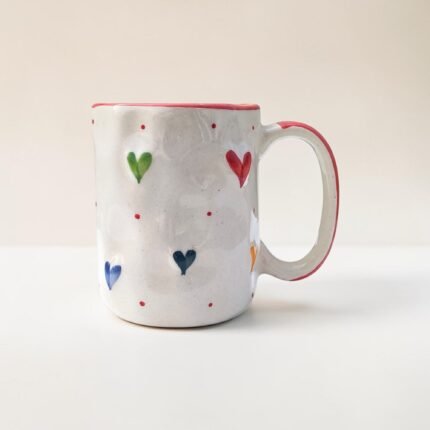
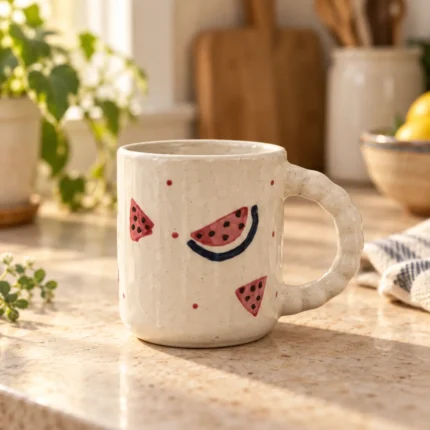
If you are choosing a new mug after reading this guide, explore a few of our in-stock handmade designs: Cute Duck Ceramic Mug, Colourful Heart Ceramic Mug, Watermelon Splash Ceramic Mug, and Pomegranate Bliss Ceramic Mug. You can also browse the complete ArtyCera Drinkware collection. Check each product page for its specific care and usage details.

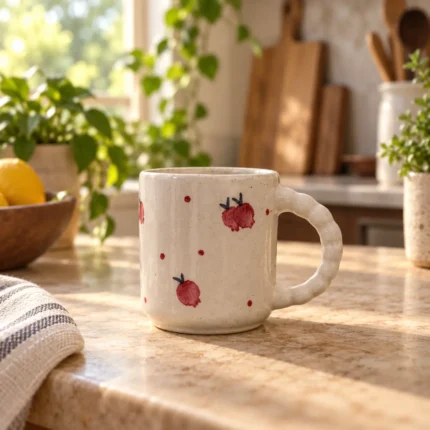
See more handmade cups and mugs in our Drinkware collection.
Summary: How to Choose Your Next Favorite Mug
By focusing on lead-free verification, food-safe glazes, and ergonomic design, you can find a mug that is both a beautiful piece of art and a safe, durable companion for your daily coffee ritual.
Frequently Asked Questions
Are handmade ceramic mugs microwave safe?
Many high-quality handmade ceramic mugs are microwave safe, but it is always important to check the product details and craftsmanship quality before regular use.
What makes a ceramic mug food safe?
Food-safe ceramic mugs use properly formulated glazes and are fired at appropriate temperatures to ensure durability and safety for everyday use.
Why do handmade ceramic mugs have slight variations?
Since handmade ceramics are individually crafted and painted by artisans, small differences in texture, finish, or shape are natural and make each piece unique.
Are handmade ceramic mugs more durable than cheap factory-made mugs?
High-quality handmade ceramic mugs are often crafted with greater attention to materials, glazing, and firing techniques, which can improve durability and longevity.
Why does glaze quality matter in ceramics?
The glaze affects both the appearance and safety of ceramic products. Proper glazing helps create a smoother, more durable, and food-safe surface.
How long does a good ceramic mug last?
A well-made high-fired stoneware mug used daily can last many years — often a decade or more — without any loss of safety or structural integrity. The key is avoiding thermal shock, not using abrasive scrubbers that thin the glaze, and retiring the mug if significant interior crazing or chips develop on the drinking rim.
Is it safe to drink chai from a handmade ceramic mug every day?
Yes — provided the mug is high-fired stoneware with a food-safe lead-free glaze and no metallic interior decoration. Daily chai is mildly acidic but not aggressive enough to interact with a well-formulated, properly fired ceramic glaze. The mug should feel smooth on the interior, show no crazing, and have no areas of exposed unglazed clay.
Related Reads
Is Ceramic Microwave Safe? — A complete guide to understanding which ceramics are safe for microwave use, how to test your pieces at home, and what to avoid.
Are Handmade Ceramics Food Safe? — Everything you need to know about glaze safety, lead in ceramics, and how to choose pieces that are truly safe for food and drink.
8 thoughts on “Is Your Ceramic Mug Safe? The Ultimate Guide to Quality and Craftsmanship”